07 April 2010

Bruce Gilbert - The Shivering Man


Bruce Gilbert was always an odd fish, even in Wire, the oddest punk band of them all. Already 30 when they formed, he seemed more like a college professor than a band member. When he later began to release music under his own name it was apparent that he was more at home in electroacoustic and noise music territory than in anything resembling pop.

Gilbert released a flood of material, starting in 1980. Together with co-conspirator Graham Lewis, he recorded four albums as Dome, their lo-fi music sounding like tape scrapings from Wire sessions, odd vocal exercises, frustration devices, aversion therapies.

A 12" as Cupol combined an almost pop rant on one side with an extended ethnic forgery noise field on the other. Credited to BC Gilbert & G Lewis, the album 3R4 contains two excellent noise ambient soundscapes with shorter tracks. Together with the single "Ends With The Sea", these formed the CD compilation 8 Time.

After seven releases in two years Gilbert showed no signs of slacking. The random noises that formed gallery installation MZUI stormed the charts (not!) in 1982. Gilbert then teamed with Lewis and Mute label boss Daniel Miller for Duet Emmo, who issued the excellent Or So It Seems and companion 12" in 1983. That same year he was in the band P'o, featured on this blog last June.

The two albums Gilbert released on Mute following this unorthodox period of music-making are likely more palatable. Commissioned by choreographer Michael Clark, "Do You Me? I Did", filled 30 minutes of the album "This Way", issued on Mute in August 1984. This is currently available on Austrian label Editions Mego, remastered and with new artwork. This piece is one of the absolute highlights of the Gilbert canon.

Conceived by Angela Conway, whose own musical career we have profiled, the dance "The Shivering Man" provided the title for the follow-up album. Released on vinyl by Mute in April 1987, the record is full of insistent pulses and fragmented instruments. One can hear guitar, bass, drums and vocals but their spectra are not used in conventional ways, nor in conventional structures. The album begins with "Angelfood", which goes through several distinct musical stages, as though replicating Gilbert's oeuvre in toto. It is one of his best pieces.

Following this, the title track sounds like cartoon characters slowly getting dragged under the earth to be buried alive. "Net in the Feather" welds bagpipes to a skipping CD, later to be jeered and whooped. "There Are" starts with something like Frippertronics until Gilbert's toneless voice begins a recitation. Then, unexpectedly, the machinic enters this organic realm. "Hommage" [sic] might be Throbbing Gristle while "Eline Cout II" sets the template for the solo AC Marias record: girl-next-door ambient vocals over insistent pulsing loop. Finally, "Epitaph For Henran Brenlar" evolves out of a dark shambles into something resembling a pop song. Graham Lewis appears half-way through and sounds great.

The Shivering Man has only been issued on CD as part of a limited three disk set in Japan. In the UK four of the seven tracks found their way to the compilation This Way To The Shivering Man. As that is also out of print, we are bringing you the record in full, restored to its original running order.

P.S. A video excerpt of "The Shivering Man", danced by Michael Clark, Julie Hood and Ian Longmuir, may be found on YouTube. Hood is also the dancer in the brilliant A.C. Marias video "One Of Our Girls Has Gone Missing".

-- Second Chameleon


download

The Shivering Man

A1 Angel Food
A2 The Shivering Man
A3 Net In The Feather
B1 There Are
B2 Hommage
B3 Eline Cout II
B4 Epitaph For Henran Brenlar

LP UK: Mute [STUMM 39] April 1987

24 February 2010

Thomas Leer - Singles 1983-85


The electronic scene of the late seventies and early eighties was led by a new kind of man. Sure there were some notable synth bands, The Human League, OMD, Depeche Mode, but the quiet man, labouring alone with his battery of monophonic synths and drum machines, was somehow closer to the alienated spirit of the age. Gary Numan, John Foxx, Thomas Dolby, Fad Gadget, these were the names that captured the popular imagination of the day.

Thomas Leer looked set to join the upper echelons of electro auteurs following the success of his debut single, "Private Plane." Recorded in his bedsit apartment, he had to nearly whisper the vocals so as not to wake his girlfriend sleeping in the next room. But the NME named it single of the week, and soon Cherry Red, the much respected indie label, offered him a deal. "4 Movements" and "Contradictions" saw him leaving behind the proto-industrial experiments of his earlier collaborations with Robert Rental, in favour of an angular, funk-inspired sound that seemed to mix a love of Sly and the Family Stone with a more poppy take on Cabaret Voltaire's Red Mecca. It was a brave experiment, especially given the primitive nature of the drum machines with which he was trying to approximate funk grooves, but they failed to translate into serious sales. As 1982 wound down, Thomas Leer seemed to have lost his way.

Then, suddenly, he reappeared two years later, having reinvented himself as a computer-savvy, sampler-wielding sophisticate, more Trevor Horn than Richard H. Kirk. Major label Arista was so taken with Leer's new worldly traveller image that they bank-rolled a series of glossy twelve inch singles to be released on a reactivated version of the Oblique label, which had last seen service for "Private Plane." Recorded with the latest in synthesizer technology, the Fairlight CMI digital sampling keyboard, these three singles offered a master class in mid-eighties pop elegance, the equal in many respects to the finest efforts of ABC, Propaganda, or Frankie Goes To Hollywood. The future must have seemed bright indeed for the former Thomas Wishart, but Arista appears to have lost confidence in Leer by the time these singles were compiled into an album. The Scale Of Ten was slipped into record stores without much fanfare in 1985, and then, just as quickly, disappeared.

Collected here are the singles that Leer released between his major releases from these two periods, Contradictions and The Scale of Ten. They not only offer a glimpse of his musical development in these, his missing years, but represent some of his most signficant achievements as a solo artist.

"All About You," his last release for Cherry Red, is the real standout, a plaintive synth ballad that is as understated as it is unforgettable. But the three singles from the reactivated Oblique label are no less striking, full of inventive arrangements, strong melodies and exquisite productions. The extended versions are especially notable, forgoing the more obvious tricks of the remix trade in favour of intriguing dub experiments and rhythmic work outs. As a bonus, we are including "Who's Fooling Who," a song released only as a flexi-disc that acccompanied a Dutch music magazine in 1983. Though not as polished as the other songs here, it offers something of a missing link between his Cherry Red and Arista incarnations.

After many years out of the music biz, Leer is back now, and recording again. Check out his web site here.

-- Crash The Driver

download


"All About You"

01 All About You
02 Saving Grace

UK 12" Cherry Red [12 Cherry 52] 1983

"International"

03 International (Global Mix)
04 Easy Way

UK 12" Arista/Oblique [LEER 121] 1984

"Heart Beat"

05 Heart Beat (Extended Mix)
06 Control Yourself

UK 12" Arista/Oblique [LEER 122] 1985

"No. 1"

07 No. 1 (Extended Version)
08 Trust Me
09 Chasing The Dragon

UK 12" Arista/Oblique [LEER 123] 1985

"Who's Fooling Who"

10 Who's Fooling Who

Netherlands Flexi Vinyl Magazine 1983


08 February 2010

The Changing Tableaux of Martha and the Muffins

logo
The great thing about art school is not that it produces great artists. The great thing about art school is that it produces so many wonderful bands. Being in an environment of intense study, exposed to the entire scope of twentieth-century thought, expands the horizons of the participants. Support for quirky works of strong subjectivity, from an institution no less, validates the individual. No longer circumscribed by petit bourgeois concerns, art students then believe they have the freedom to do anything.

And what that often meant, in the heady years of the late seventies, was getting together with a bunch of friends and trying out a few tunes.

So it was at the Ontario College of Art in Toronto, now a landmark building of great vivacity, then a dour series of brick barracks. Guitarist David Millar asked his friend Mark Gane, sometimes to be found splicing tape in the college Sound Lab, to start a band. Gane grabbed high-school friend Martha Johnson, then a student at York University in the north of the city. Once in the band Oh! Those Pants, she settled into keyboards and vocals -- because no-one else dared sing. She in turn pulled in her friend Carl Finkle as bassist as Mark's brother Tim Gane filled out the band on drums.

Rehearsals took place in an unheated stable. Named as a joke from a list of equally impossible monikers, they made an anti-punk statement by going for the softest label possible. Their debut was at the college Halloween party... yes, I remember the days when people did stuff like that.

This line-up expanded by two more bodies, likely because the parties were more fun that way. Martha Ladly, another friend from high school, joined on keyboards and additional vocals. And so the name Martha & the Muffins now took on extra resonance. Which Martha? Ah, a political question and a potential time-bomb perhaps.

Andy Haas, saxophonist extraordinaire, completed the line-up. At the time several live bands in the area had permanent sax players, a by-product of the strong Ontario jazz-blues scene. Chicago hipsters would regularly sally on up to Toronto, stopping at London, Guelph or Kitchener-Waterloo on the way. But not many sax-fueled bands made it to record; Andy's exploratory jazz leanings gave the band a distinct sound.

Insect LoveInsect Love 7"
A1 Insect Love [original version] (3:54)
B1 Suburban Dream [original version] (2:56)
7" Canada [MM001] 1978

This extended line-up trimmed somewhat when Millar switched to an off-stage role as sound man. It was this band that recorded and self-released a single with a punky black & white cover. "Insect Love" b/w "Suburban Dream" laid things on the line in 1978. The a-side is quirky and impossible, a deviant fantasy, but a naive and coy one. "I took a chance / on interspecies romance" declares the (male) narrator, though the song is sung by Martha Johnson. It's too silly to be kinky. Martha and the Muffins are, after all, a pretty nice bunch of people.

The b-side is where the action is: a new wave (by way of pub rock) dagger in the heart of all they had escaped from when leaving high school. The scenario is portrayed with razor-sharp lyrics:

Strolling through the plaza in the cool twilight
Sucking on a synthi-shake
Hidden in the ambient florescent night
High school boys are on the make


The topical references to the CN Tower and Hockey Night In Canada demonstrate that the Muffins are one of us, not some faceless band from anywheresville. And then there is the priceless couplet "thinking 'bout evolution puts me in a sweat / the price a city dweller pays". This was the Canadian version of XTC: acerbic lyrics sneered out of pursed lips, odd keyboard runs and pounding energy. Even if recorded fairly poorly this single makes a statement.
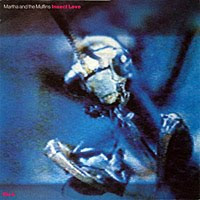
Insect LoveInsect Love 7"
A1 Insect Love (4:10)
B1 Cheesies And Gum (3:05)
7" UK Dindisc [DIN 4] 1979.10

A demo made its way to Robert Fripp and this secured them a date at Hurrah's in NYC. Then everything moved at light speed. Their gig in March of 1979 was witnessed by an A&R rep from Virgin, who snapped them up immediately, whisked them off to England and got an album in the can. Engineered by Richard Manwaring and produced by Mike Howlett, this did a reasonable job of capturing the songs, even if the energy of their live performances was muted

The first single was a re-recording of that hexapodous love song. It's available on a Virgin compilation, so we do not include it here. The b-side, "Cheesies And Gum", is a reference so Canadian that no-one in the UK actually knew what it meant when it showed up on the debut album Metro Music. After three songs by Mark Gane, this tune is co-credited to Martha Ladly.

Echo BeachEcho Beach 7"
A1 Echo Beach (3:38)
B1 Teddy the Dink [early version] (3:29)
7" UK Dindisc [DIN 9] 1980.01

And then it happened. "Echo Beach", that perfect snatch of summer longing, was issued in the dead of winter 1980 when everyone was sick of the holidays and the rain and wanted nothing more than to get away from it all. It comes in like a breeze through an open window and kick starts any heart. "Aaaaah, she's a romantic fool -- so am I but nobody knows it yet!"

Covered many times, first by Fripp's wife Toyah Wilcox in an execrable version, this remains the pinnacle of new wave pop. That little catch in the voice when the Martha's sing "clerk". The soaring sax solo. The close harmonies on the chorus. The chiming guitar. Yep, you could base a career on that sound.

Or it could be your albatross, as many one-hits are for the wonders who produce them. A huge hit creates expectations, creates pressures. Record bosses want more, more, more. They're not happy with a single vacation in the sun, they want a churning solar ball of hits all the time. So you go on tour, you go on TV, you go back into the studio. As the label issues single after single in the hopes of topping the charts a second time.

"Teddy the Dink" is not a response to that, but it might have been. Co-written with a certain "B. Harvey", it is literally the underside of that nice beach. It's about a nasty person stuck in a nasty life, but this time with no way out. It reminds me of some of those perfect bedsit dramas Squeeze were so good at writing. Later re-recorded to fill out the second album, this version hits harder and has a more chilling laugh.
SaigonSaigon 7"
A1 Saigon [single version] (3:51)
B1 Copacabana (1:22)
7" UK Dindisc [DIN 17] 1980.05

Personally, if I worked for Virgin, I would have tried "Paint By Number Heart" as a single. Instead we have the lovely, "Saigon", another travelogue, hinting at exotic possibilities in foreign lands. The single version has some great horn squawks in the second verse and I prefer it to the less flavoursome mix on the album.

The b-side is not the only double-tracked single I own, but it is the only one where one drop of the needle gets you "Copacabana" and another drop will get you the same song... backwards! Intriguingly, both sides were written by David Millar, the latter with Martha Johnson.

About InsomniaAbout Insomnia 7"
A1 About Insomnia [single version] (3:09)
B1 1 4 6 (4:45)
7" UK Dindisc [DIN 19] 1980.07

Issued on green vinyl with a lovely cover, "About Insomnia" is a perfect pop tune, with a loping beat and elliptical lyrics. And once again "the chimes of foreign places call for a changing tableau... do you suppose?" This single version has a surprisingly brash sax break which really should have been reigned in. But it acts as a great taster for the second album, Trance and Dance, issued quickly to keep the pressure on the market.

The b-side, "1 4 6" is a jam session, punctuated by odd vocal samples and noises. It could just as readily be found on a Flying Lizards album. But the Muffins were always an art school band. If they wanted to make noise for five minutes then they would make noise for five minutes. It is regrettable that the need to produce "Echo Beach Part Two" saw them increasingly trapped in a certain new wave production formula that was at odds with the more experimental content.
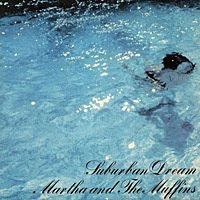
Suburban DreamSuburban Dream 7"
A1 Suburban Dream [single version] (2:56)
B1 Girl Fat (4:00)
7" UK Dindisc [DIN 21] 1980.08

This single follows the same formula. The a-side is a compact would-be hit by Mark Gane and the b-side is a more sprawling jam, credited to the entire band, but with bass prominent. Here the need to come up with material quickly led to the re-recording of a song at least two years old. Though this version is the definitive take.

Was EzoWas Ezo 7"
A1 Was Ezo [single mix] (3:22)
B1 Trance and Dance [edit]
7" UK Dindisc [DIN 27] 1980.10.30

The last single from the band's "English period" is as good as they get. The b-side is Martha Johnson's title track from the album cut down to fit (so we don't include it in our compilation). The a-side is Martha Ladly's tale of Hokkaido -- which once was called Ezo, hence the cryptic title. The version here, with bountiful reverb drenching the vocals, provides the template for Ladly's first solo single.

In 1981, as their second album was being released, the band ran away from increasing pressures and returned to Canada, less Ladly. There was a change of bassists and the group jumped right back into the studio with then-unknown producer Daniel Lanois. The result is one of the most astounding albums ever laid to vinyl, This Is The Ice Age. You should drop everything RIGHT NOW and buy the impeccable re-issue.

In the meantime, relish these eleven tales of changing tableaux.

-- Second Chameleon

download

Martha and the Muffins: Changing Tableaux
01 Insect Love [original version]
02 Suburban Dream [original version]
03 Teddy The Dink [early version]
04 Saigon [single version]
05 Copacabana [forwards]
06 Copacabana [backwards]
07 About Insomnia [single version]
08 1 4 6
09 Suburban Dream [single version]
10 Girl Fat
11 Was Ezo [single version]


These rarities, uncollected on any official release, have been ripped from our own collection. The copy of "Insect Love" used has a glitch that we've repaired as well as might. If you want to own a slice of history, go on over to the band's official site, where you can still buy this vinyl.

You will also find there details of Martha and the Muffins' brand new album, the first in eighteen years.

27 January 2010

Robert Rental - Collected Solo Works


Proto-industrial pioneer, and one of the architects of the DIY revolution in UK synth music, Robert Rental is perhaps best known for his pair of collaborations with other artists. With Thomas Leer, whose electro funk mash ups figure pominently in any collection of minimal synth classics, he released the brooding, epochal album, The Bridge, for Throbbing Gristle's Industrial Records in 1979. And with Daniel Miller, the man who signed everyone from Fad Gadget to Depeche Mode to his fledgling Mute label, he recorded a shambolic but strangely inspired live set at the West Runton Pavilion on March 6, 1980.

These collaborations have secured Rental a place in the annals of post punk, but his small but important body of solo work remains little known. Born Robert Donnachie in Port Glasgow, Rental and his friend, Thomas Leer, left their native Scotland in the late seventies to check out the burgeoning punk scene in London. Taking their cue from bands like The Desperate Bicycles, who had shown the world that it was possible to be successful in the music business on your own terms, Rental and Leer decided to each record and release a single on labels of their own. Leer would call his Oblique, perhaps in reference to Eno's Oblique Strategies cards, and Rental named his Regular Records.

They pooled their meagre resources to rent a four-track reel-to-reel tape recorder, which they set up first in Leer's flat in Finsbury Park before carting it across the Thames to where Rental lived in Battersea. Leer recorded the exquisite pop paean to reclusive millionaires, "Private Plane," using Rental's "stylophone," a pen-like instrument that produced a vaguely theremin-like sound, to give the record its lo-fi futuristic sheen. Rental's "Paralysis," by contrast, layered splintered guitars, swampy basses, and sheets of discordant noise over an elliptical vocal that suggested nothing so much as a man allowing himself to be swept away by the river's under tow. The flip side offered more coherent fare, with the drum machine up front, and Rental's lyrical refrain ("We're vampires / Definitely") evoking the more gothic side of Suicide. "Private Plane" made single of the week in NME, while Rental's record went largely unnoticed, save by a handful of more progressive artists, like Cabaret Voltaire and Genesis P. Orridge, who felt they had found a soul mate.

Following their gig at the West Runton Pavilion, Daniel Miller offered to produce Rental's next single, and release it through Mute. "Double Heart" b/w "On Location" was recorded at Blackwing Studios in August 1980, with Rental joined once again by Leer on piano (for the a-side only) and Robert Gorl of D.A.F. on drums and backing vocals. The result is pure post punk bliss from start to finish. "Double Heart" is underpinned by Rental's moody-almost-dubby bass playing, with floating synth lines and piano weaving in out of a plaintive melody. "On Location" is a more dissonant affair, with Gorl's drums way up front in the mix, and Rental making excellent use of the fractured tape loops of his earlier releases.

"Double Heart" gave ample evidence that Rental could bridge the gap between synth pop and post punk, aligning the pastoral prettiness of Eno's Another Green World with the scenes of urban decay and despair that characterised PIL or Joy Division. A solo album seemed the next obvious step, and in the months that followed Rental turned his attention to creating some astounding soundscapes with his Wasp synthesizer, a British-made instrument that had a warmer yet more aggresive sound than the Japanese-made Korgs and Yamahas favoured by Depeche Mode and The Human League. In an article for Sound On Sound magazine, TG's Chris Carter recalls: "The first time I heard the Wasp was in 1978 while I was with Throbbing Gristle and Industrial Records, and happened to hear some demos by Robert Rental and Thomas Leer. They were writing very individualistic 'electronic' songs using just voices, guitars and two Wasps. The Wasps supplied all the keyboard and percussion parts, and we were amazed at the sound they were producing with these, especially as they were using no drum machines (I think they may have used a Spider sequencer)."

Circulated as a cassette tape entitled, "Mental Detention," Rental's home-made demos are dark, introspective, and never less than fascinating glimpses into an album that was never to be. Simply titled A1, A2, A3, and B1, B2, B3, and so on, these eight long instrumentals are less songs than architectural forms, ranging from the huge twisted heaps of a crashed airliner, to vacant office building concourses, and underground parking lots. Rental makes the most of his primitive gear, building his music out of the limitations of his resources rather than letting it be defined by them. The latter tracks are especially fascinating, with bits of seventies tv shows haunting the edges of the distant droning synths. Little wonder, then, that the A&R men of the day didn't snap it up.

Rental left the music business in the early 1980s, turning his attention to his family. He died following a bout with lung cancer in 2000. He was 48 years old.

Gathered together here are Robert Rental's two single releases, and the "Mental Detention" tape, each sourced from the very best copies available. Taken together they make a powerful argument for the man's talents, and our loss.

-- Crash The Driver

download

"Paralysis"

01 Paralysis
02 A.C.C.

UK 7" Regular [RECO 002] 1978

"Double Heart"

03 Double Heart
04 On Location

UK 7" Mute [MUTE 010] 1980

"Mental Detention"

05 A1
06 A2
07 A3
08 B1
09 B2
10 B3
11 B4
12 B5

UK Cassette Self-Released 1980

03 January 2010

World Shut Your Mouth by Julian Cope


Happy New Year to all our TSM readers! We trust that 2010 finds you all well and looking forward to the next twelve months of rare post-punk, new wave, and minimal synth postings.

To celebrate our second year here at TSM, we kick things off with Julian Cope's criminally underrated, and unjustly out of print, debut solo album following the demise of The Teardrop Explodes. Released in 1984, World Shut Your Mouth (not to be confused with the later single of the same name) finds Cope eschewing the day-glo psychedelic pop of "Reward" and "Treason" for a more contemplative and personal tone. Oh, sure, there are a pair of truly glorious singles here in "The Greatness and Perfection of Love" and "Sunshine Playroom," each full of inventive arrangements and heroic vocals. But, by and large, the mood of this album is more introspective, with Cope crafting poignant tales from the darkside of fame to the accompaniment of plaintive organs and lonesome woodwinds. The result is, to my mind, the most memorable of Cope's solo albums, with melodies that linger like a half forgotten dream, and lyrics that offer some plain and honest truths. My favourite has to be this verse from "Elegant Chaos:"

People I see
Just remind me of moo-ing like a cow in the grass
But that's not to say
There's anything wrong with
Being a cow anyway

It's brilliant stuff from start to finish and a perfect way to welcome in the New Year!

-- Crash The Driver

download


World Shut Your Mouth - Julian Cope

01 Bandy's First Jump
02 Metranil Vavin
03 Strasbourg
04 Elegant Chaos
05 Quizmaster
06 Kolly Kibber's Birthday
07 Sunshine Playroom
08 Head Hang Low
09 Pussyface
10 Greatness And Perfection
11 Lunatic And Fire-Pistol

UK LP Mercury [MERL 37] 1984