Showing posts with label Martha Ladly. Show all posts

24 May 2010

Trevor Herion - Beauty Life


The pop charts of the mid-eighties were crowded with electro crooners, their unabashedly romantic yearning standing in stark contrast to the icy and distant synthesizers and white boy funk grooves that filled out the sound. David Sylvian hoped for visions of China. Peter Godwin wished for images of heaven. And Midge Ure longed for Vienna. But no electro crooner could touch the heart strings better than Trevor Herion.

Born in Cork, Ireland, Herion moved to London in the late seventies, and was living in a squat with members of The Psychedelic Furs when he hooked up with drummer Paul Simon, brother of Robin Simon, the guitar player who would would later have notable stints with both Ultravox and Magazine. Together with Mark Scholfield on guitar and Michael French on bass, Herion and Simon formed The Civilians, and released a single for Arista entitled "Made For Television" (1980). The singer and his drummer friend left the band before its sophomore single had appeared, and joined with Matthew Seligman and Thomas Dolby to form The Fallout Club. Here Herion's powerful voice, every note seemingly touched with some irrepressible sadness, came most fully to the fore, offering a powerful embellishment to Dolby's rapidly maturing song writing and arranging abilities. The analogue joys of "Pedestrian Walkway" have been recently rediscovered by a generation of Dolby fans thanks to its inclusion on the remastered, 2 cd version of The Golden Age of Wireless, while its majestically over-the-top follow up, "Wanderlust," has graced several minimal synth compilations in recent years.

Herion's solitary solo album has been less well remembered, however. Released in 1983 on Interdisc Records, Beauty Life is a highly polished slice of electro pop. Graced with a Peter Saville cover, it featured a stellar cast of backing musicians, including another Dolby alum, Kevin Armstrong, and Martin Young of Colourbox. Moreover, the label brought in one of the most in-demand pop producers of the day, Steve Levine, who had previously worked with Culture Club and China Crisis among others. But the album is still very much Herion's, his powerful voice surging up as from some unknown depths of world weary despair, gliding effortlessly over the thick slab of eighties beats, and ascending to its own lonely orbit.

Among its many highlights, the album included "Kiss of No Return," a pre-album single released by Imperial Recordings and distributed by Island in 1982. Arranged by Thomas Dolby (the drum program has a distinct resemblance to some of the beats heard on "Europa and the Pirate Twins"), and produced by Mike Howlett (who also lent his talents to Martha Ladly's sublime solo debut), the song somehow manages to transcend its faux Parisian instrumentation (accordians and violins), and become something almost otherworldly, a loving lament to a more elegant age.

Three further singles were released from the album: "Dreamtime" and "Love Chains" are cast very much in the ABC - Heaven 17 mould, replete with gated snare drums, funky guitars, and towering backing vocals, while the dreamy chord progressions and slap bass of "Love Chains" are strikingly reminiscent of Levine's work with China Crisis. Gathered as the first three tracks on side one, these singles make a muscular statement of purpose, but in some ways it's the album tracks on the second side, full of European longueur and jazzy interludes, that more fully capture the essence of Herion's sound. "Big City," "Betrayed," "The Jazz Age," the titles alone evoke the elongated shadows and dimly lit alleys in which Herion's imagination preferred to walk.

Amid the welter of electro crooners, however, Beauty Life seems to have gone unnoticed, its failure to dent the charts not helped by a feud with Levine that resulted in his name being removed from the album's credits. In the aftermath of its failure, Herion slipped into a prolonged period of depression. He took his own life on October 1, 1988. A retrospective anthology of his best work, including both his solo recordings and contributions to The Civilians and The Fallout Club, is long overdue.

-- Crash The Driver

download


Trevor Herion - Beauty Life

01 Dreamtime
02 Love Chains
03 Fallen Angel
04 Success, and the Decline of the Western Man
05 Big City
06 Betrayed
07 The Jazz Age
08 Legends
09 Kiss of No Return

UK LP: Interdisc [INTO 3] 1983

08 February 2010

The Changing Tableaux of Martha and the Muffins

logo
The great thing about art school is not that it produces great artists. The great thing about art school is that it produces so many wonderful bands. Being in an environment of intense study, exposed to the entire scope of twentieth-century thought, expands the horizons of the participants. Support for quirky works of strong subjectivity, from an institution no less, validates the individual. No longer circumscribed by petit bourgeois concerns, art students then believe they have the freedom to do anything.

And what that often meant, in the heady years of the late seventies, was getting together with a bunch of friends and trying out a few tunes.

So it was at the Ontario College of Art in Toronto, now a landmark building of great vivacity, then a dour series of brick barracks. Guitarist David Millar asked his friend Mark Gane, sometimes to be found splicing tape in the college Sound Lab, to start a band. Gane grabbed high-school friend Martha Johnson, then a student at York University in the north of the city. Once in the band Oh! Those Pants, she settled into keyboards and vocals -- because no-one else dared sing. She in turn pulled in her friend Carl Finkle as bassist as Mark's brother Tim Gane filled out the band on drums.

Rehearsals took place in an unheated stable. Named as a joke from a list of equally impossible monikers, they made an anti-punk statement by going for the softest label possible. Their debut was at the college Halloween party... yes, I remember the days when people did stuff like that.

This line-up expanded by two more bodies, likely because the parties were more fun that way. Martha Ladly, another friend from high school, joined on keyboards and additional vocals. And so the name Martha & the Muffins now took on extra resonance. Which Martha? Ah, a political question and a potential time-bomb perhaps.

Andy Haas, saxophonist extraordinaire, completed the line-up. At the time several live bands in the area had permanent sax players, a by-product of the strong Ontario jazz-blues scene. Chicago hipsters would regularly sally on up to Toronto, stopping at London, Guelph or Kitchener-Waterloo on the way. But not many sax-fueled bands made it to record; Andy's exploratory jazz leanings gave the band a distinct sound.

Insect LoveInsect Love 7"
A1 Insect Love [original version] (3:54)
B1 Suburban Dream [original version] (2:56)
7" Canada [MM001] 1978

This extended line-up trimmed somewhat when Millar switched to an off-stage role as sound man. It was this band that recorded and self-released a single with a punky black & white cover. "Insect Love" b/w "Suburban Dream" laid things on the line in 1978. The a-side is quirky and impossible, a deviant fantasy, but a naive and coy one. "I took a chance / on interspecies romance" declares the (male) narrator, though the song is sung by Martha Johnson. It's too silly to be kinky. Martha and the Muffins are, after all, a pretty nice bunch of people.

The b-side is where the action is: a new wave (by way of pub rock) dagger in the heart of all they had escaped from when leaving high school. The scenario is portrayed with razor-sharp lyrics:

Strolling through the plaza in the cool twilight
Sucking on a synthi-shake
Hidden in the ambient florescent night
High school boys are on the make


The topical references to the CN Tower and Hockey Night In Canada demonstrate that the Muffins are one of us, not some faceless band from anywheresville. And then there is the priceless couplet "thinking 'bout evolution puts me in a sweat / the price a city dweller pays". This was the Canadian version of XTC: acerbic lyrics sneered out of pursed lips, odd keyboard runs and pounding energy. Even if recorded fairly poorly this single makes a statement.
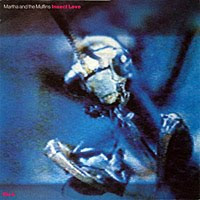
Insect LoveInsect Love 7"
A1 Insect Love (4:10)
B1 Cheesies And Gum (3:05)
7" UK Dindisc [DIN 4] 1979.10

A demo made its way to Robert Fripp and this secured them a date at Hurrah's in NYC. Then everything moved at light speed. Their gig in March of 1979 was witnessed by an A&R rep from Virgin, who snapped them up immediately, whisked them off to England and got an album in the can. Engineered by Richard Manwaring and produced by Mike Howlett, this did a reasonable job of capturing the songs, even if the energy of their live performances was muted

The first single was a re-recording of that hexapodous love song. It's available on a Virgin compilation, so we do not include it here. The b-side, "Cheesies And Gum", is a reference so Canadian that no-one in the UK actually knew what it meant when it showed up on the debut album Metro Music. After three songs by Mark Gane, this tune is co-credited to Martha Ladly.

Echo BeachEcho Beach 7"
A1 Echo Beach (3:38)
B1 Teddy the Dink [early version] (3:29)
7" UK Dindisc [DIN 9] 1980.01

And then it happened. "Echo Beach", that perfect snatch of summer longing, was issued in the dead of winter 1980 when everyone was sick of the holidays and the rain and wanted nothing more than to get away from it all. It comes in like a breeze through an open window and kick starts any heart. "Aaaaah, she's a romantic fool -- so am I but nobody knows it yet!"

Covered many times, first by Fripp's wife Toyah Wilcox in an execrable version, this remains the pinnacle of new wave pop. That little catch in the voice when the Martha's sing "clerk". The soaring sax solo. The close harmonies on the chorus. The chiming guitar. Yep, you could base a career on that sound.

Or it could be your albatross, as many one-hits are for the wonders who produce them. A huge hit creates expectations, creates pressures. Record bosses want more, more, more. They're not happy with a single vacation in the sun, they want a churning solar ball of hits all the time. So you go on tour, you go on TV, you go back into the studio. As the label issues single after single in the hopes of topping the charts a second time.

"Teddy the Dink" is not a response to that, but it might have been. Co-written with a certain "B. Harvey", it is literally the underside of that nice beach. It's about a nasty person stuck in a nasty life, but this time with no way out. It reminds me of some of those perfect bedsit dramas Squeeze were so good at writing. Later re-recorded to fill out the second album, this version hits harder and has a more chilling laugh.
SaigonSaigon 7"
A1 Saigon [single version] (3:51)
B1 Copacabana (1:22)
7" UK Dindisc [DIN 17] 1980.05

Personally, if I worked for Virgin, I would have tried "Paint By Number Heart" as a single. Instead we have the lovely, "Saigon", another travelogue, hinting at exotic possibilities in foreign lands. The single version has some great horn squawks in the second verse and I prefer it to the less flavoursome mix on the album.

The b-side is not the only double-tracked single I own, but it is the only one where one drop of the needle gets you "Copacabana" and another drop will get you the same song... backwards! Intriguingly, both sides were written by David Millar, the latter with Martha Johnson.

About InsomniaAbout Insomnia 7"
A1 About Insomnia [single version] (3:09)
B1 1 4 6 (4:45)
7" UK Dindisc [DIN 19] 1980.07

Issued on green vinyl with a lovely cover, "About Insomnia" is a perfect pop tune, with a loping beat and elliptical lyrics. And once again "the chimes of foreign places call for a changing tableau... do you suppose?" This single version has a surprisingly brash sax break which really should have been reigned in. But it acts as a great taster for the second album, Trance and Dance, issued quickly to keep the pressure on the market.

The b-side, "1 4 6" is a jam session, punctuated by odd vocal samples and noises. It could just as readily be found on a Flying Lizards album. But the Muffins were always an art school band. If they wanted to make noise for five minutes then they would make noise for five minutes. It is regrettable that the need to produce "Echo Beach Part Two" saw them increasingly trapped in a certain new wave production formula that was at odds with the more experimental content.
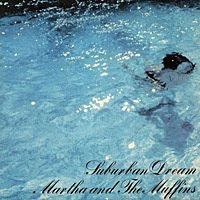
Suburban DreamSuburban Dream 7"
A1 Suburban Dream [single version] (2:56)
B1 Girl Fat (4:00)
7" UK Dindisc [DIN 21] 1980.08

This single follows the same formula. The a-side is a compact would-be hit by Mark Gane and the b-side is a more sprawling jam, credited to the entire band, but with bass prominent. Here the need to come up with material quickly led to the re-recording of a song at least two years old. Though this version is the definitive take.

Was EzoWas Ezo 7"
A1 Was Ezo [single mix] (3:22)
B1 Trance and Dance [edit]
7" UK Dindisc [DIN 27] 1980.10.30

The last single from the band's "English period" is as good as they get. The b-side is Martha Johnson's title track from the album cut down to fit (so we don't include it in our compilation). The a-side is Martha Ladly's tale of Hokkaido -- which once was called Ezo, hence the cryptic title. The version here, with bountiful reverb drenching the vocals, provides the template for Ladly's first solo single.

In 1981, as their second album was being released, the band ran away from increasing pressures and returned to Canada, less Ladly. There was a change of bassists and the group jumped right back into the studio with then-unknown producer Daniel Lanois. The result is one of the most astounding albums ever laid to vinyl, This Is The Ice Age. You should drop everything RIGHT NOW and buy the impeccable re-issue.

In the meantime, relish these eleven tales of changing tableaux.

-- Second Chameleon

download

Martha and the Muffins: Changing Tableaux
01 Insect Love [original version]
02 Suburban Dream [original version]
03 Teddy The Dink [early version]
04 Saigon [single version]
05 Copacabana [forwards]
06 Copacabana [backwards]
07 About Insomnia [single version]
08 1 4 6
09 Suburban Dream [single version]
10 Girl Fat
11 Was Ezo [single version]


These rarities, uncollected on any official release, have been ripped from our own collection. The copy of "Insect Love" used has a glitch that we've repaired as well as might. If you want to own a slice of history, go on over to the band's official site, where you can still buy this vinyl.

You will also find there details of Martha and the Muffins' brand new album, the first in eighteen years.

15 November 2009

BBC In Concert by The Teardrop Explodes


Of course, the choice was my own. But what if I failed?

The very first thing I did in my first year in university was head downtown with my friends to buy concert tickets. I had a two-speed Toyota Corolla that made a delightful humming sound when barrelling down the Don Valley Parkway like a sewing machine trying to achieve escape velocity. But it made me a popular guy among the people in residence, seeing as we were so far from the action at our remote commuter campus. We had all been to the student loan office earlier in the day, and I had cash to spare--my dad had doctored the student loan applications in such a way that I had received the maximum amount as a grant.

New Wave. No Wave. New Romantic. Post Punk. Mod. Ska. Rock a' Billy. They were all big in Toronto in 1981, and the record companies and promoters saw the city as the gateway to the North American market. So as we stared up at the chalkboard listing all the upcoming concerts at Records On Wheels, it was an embarrassment of riches. Echo & The Bunnymen. The Jam. The Stray Cats. New Order. Wah! Blurt. Nash The Slash. I bought tickets for 'em all that day, coming back to my dorm room with a deliciously thick slab of waxen cardboard.

By the time The Teardrop Explodes, one of my favourite bands of the period, showed up the following April to promote the recently released Wilder, I was a seasoned, even somewhat jaded, concert goer. Nothing was ever going to quite match the Siouxsie & the Banshees show I had seen back in November. Her Siouxsiness had actually spoken to me as I stood in line in front of the venue. She insulted me, true. But that made it all the better. How could Julian Cope top that?

They say that the decisions a man makes are the measure of his worth. And I was about to test my worth. The morning after The Teardrop Explodes were scheduled to play The Concert Hall, turned out to be the date for the final exam for one of my courses. I was in a bit of a bind. Having spent most of the year hanging out at clubs and listening to or talking about music, I really did need to spend that night studying if I wanted to pass. If I wanted to be a man.

But I went anyway. The Teardrop's had undergone some changes by this point. Alan Gill, the guitar player who had penned their breakthrough hit "Reward" while on hiatus from Dalek I, had left the band. His replacement, Troy Tate, added a pointillist sensibility to The Teardrop's sound, sending a colourful spray of notes across new tracks such as "Like Leila Khaled Said," while bassist Aflie Agius (on loan from Martha Ladly's The Scenery Club), provided a distinctly funky edge to the older songs like "Thief Of Baghdad."

In his outrageously brilliant autobiography, Head On, Cope records how the band consumed "a frenzied chemical picnic" in Detroit before daring to venture across the border. "By the early hours of the next morning we passed into Canada, our mouths forced into amphetamine smiles and our lips chewed and raw." Of the gig in Toronto the next night, he has less than fond memories. "I think we were shit. We did two sets that night, one was unremarkable and the other sucked big logs." I wouldn't disagree, but I didn't enjoy it any less as a result.

By the end of the year the band had dissolved into a lysergic pool of chaotic infighting and mad hallucinations, leaving behind their third album, Everyone Wants To Shag The Teardrop Explodes, sadly incomplete. Cope claimed he had a choice, too. "I could give up fame, or drugs. I chose to give up fame." It was a choice that has made for a mixed solo career, some of it exceptional, some of it not. But give him credit for refusing to concede to the hunger of fans for a reunion, the all too often sad postscript to the story of so many bands from the period.

Here are The Teardrop Explodes just before they headed out on the tour that threatened to derail my academic career, still fit, trim, and in fighting shape, and doing their best for the BBC. This 1981 live set was originally scheduled for an official release, even had a catalogue number, but was cancelled at the last minute, no doubt by Cope himself, who nursed ill feelings about his time as a pop star for far too long. It is a brilliant document of the band at the height of their fame, with both "Reward" and a reissue of "Treason" in the charts, and the world waiting expectantly for the follow up to Kilimanjaro. Check out the deliriously mad version of "Sleeping Gas," the languid, trippy, blissed out outro to "The Culture Bunker," and the wonderfully understated reading of "Suffocate." Hardcore fans will take special delight in "Screaming Secrets," a track which eventually saw the light of day on the Saint Julian album, here given the full Teardrop treatment.

And the exam? I think I must have passed. But truth be told, I remember the gig much better than anything from the course.

-- Crash The Driver

download


The Teardrop Explodes - BBC Live

01 Books
02 Thief of Baghdad
03 Sleeping Gas
04 Passionate Friend
05 Like Leila Khaled Said
06 Suffocate
07 Poppies In The Field
08 The Culture Bunker
09 Reward
10 Went Crazy
11 Screaming Secrets
12 When I Dream
13 The Great Dominions
14 Treason

UK CD Windsong [150] 1995

01 February 2009

A Short History of Martha Ladly... Via YouTube

No-one's history should be told by YouTube. But since Crash The Driver did such a good job it's only fun to look at the flip side. Music videos are not the most forgiving medium, are they?

"Light Years From Love"
...in which we learn Martha has a pretty good back-stroke.


"Club Country" by The Associates
...featuring some naff violin miming but a hilarious Martha moment midway.


"Party Fears Two" by The Associates
...bad suit day?

...or maybe the flapper look?


"18 Carat Love Affair" by The Associates
...Billy loves Martha, Martha loves Billy?


"Addicted To Love" by Robert Palmer
Ladly toured to Japan with the band in 1986 and can be seen here having "fun" at 0:30 and 3:12. I say that in kindness so you can skip the rest of the video. But you do know that Palmer covered a Gary Numan tune and even co-wrote a song with Numan? It's a wonderful world!


-- Second Chameleon

25 January 2009

The Charmed Life of Martha Ladly


Closer, now closer the shore
Tarry, now tarry no more
Away from the one that I love


Was there anyone in the post-punk era who led a more charmed life than Martha Ladly? From playing small clubs in Toronto, Canada, to a world wide top ten single, from aspiring art student to graphic designer for some of the most recognized names in music, hers is surely one of the most remarkable careers of the period. That she also left us with just two solo singles, now largely forgotten but no less wonderful for being so, seems only to add to the charm.

Like many young art students enrolled at the Ontario College of Art in the late seventies, Ladly found herself swept up by the mad excitement of the punk-new wave scene on the Queen Street Strip. Just a block south of their lecture halls, OCA’s best put aside their charcoal and oil paints, poured themselves into skinny jeans, and thrashed away at guitars and drums in clubs like The Beverley and The Rivoli. Martha and the Muffins were an established band on the scene when they approached Ladly, who played guitar, with the idea that she join them. They in fact already had a guitar player, the prodigiously talented Mark Gane. And they already had a Martha, in lead vocalist Martha Johnson, but it scarcely seemed to matter. Ladly simply switched to keyboards, weaving curlicued melodies around the band’s angular, Talking Heads influenced dance numbers, and when she joined in on vocals, too, it just all seemed to work.

In 1979, a demo tape was dispatched to Glenn O’Brien, record reviewer for Andy Warhol’s Interview magazine, who in turn passed it onto an A&R rep for Virgin Records, and before anyone on The Strip could believe it, the Muffins were jetting off to England to record their debut album at the Manor Studios. Metro Music is the very essence of New Wave: irresistible bass grooves, chiming guitars, sudden bursts of saxophone, and instantly memorable tunes about life in the city and its suburbs. On "Echo Beach" Martha Johnson sang about the loneliness of the cubicle worker, of a clerk dreaming of escape to a lakeside park, and the whole world got it. This was 1980, caught like lightning in the jar of a three and a half minute pop song.

No doubt as surprised as the band was by their sudden success, the record label sent the Muffins on tour across the UK and North America to support the album, and then booked them back into the Manor to whip up a sequel, Trance And Dance. Ladly penned one of the album's singles, "Was Ezo," and co-wrote a couple of the other tracks, but it seems that it was her work on the album's cover art that captured her attention most. It not only allowed her to return to her art school roots, but put her in touch with Peter Saville, the visionary designer whose work set the Factory label apart from all others. She soon left the Muffins, won a scholarship, and returned to the UK to study. There she renewed her relationship with Saville, contributing the Futurist-inspired painting that graced the cover of New Order’s Factus 8 1981-82 EP, and suggesting the titles for Orchestral Manoeuvres in the Dark's Architecture and Morality album, and subsequent hit single, "Tesla Girls."

Martha Ladly did not entirely abandon her performing career, however. She sang backing vocals and played keyboards on The Associates' Sulk (appearing with them on Top of The Pops) in 1982. She even joined Robert Palmer for a tour of Japan in 1986. But it is the pair of singles released under variations of her own name that most deserve notice.

Attributed to Martha Ladly and The Scenery Club, and produced by Mike Howlett, "Finlandia" is a glorious slice of post-punk pop. Ladly’s high, delicate voice is born up on a surging wave of sound, held aloft by rolling drums, ascending piano figures, and a rousing chorus that positively aches for the Nordic homeland. It has some of the yearning, Romantic quality that OMD achieved on singles like "Joan of Arc" and "Maid Of Orleans," paired with a wistfulness and winsomeness that were purely her own. It's these same qualities that helped make her subsequent single so memorable.

Released under the name of "Martha," and co-written with another ex-pat Canuck (and Peter Saville collaborator), Brett Wickens, "Light Years From Love" appeared on Island Records in 1983. It boasted a string arrangement by Simon Jeffes of The Penguin Cafe Orchestra, and New Order’s Peter Hook provided one of his signature bass lines. For those who only saw the video, with Ladly emerging from a swimming pool in slow motion, it may well have seemed a purely commercial endeavour, the kind of producer-led project where the singer is just there to add some glamour. But "Light Years From Love" is very much a Martha Ladly song, its brightly sparkling sequencers off set by her melancholic tale of sidereal love. With its stellar cast of players, and glossy Steve Nye production, the single attracted some attention, but not enough, apparently, to warrant a full album.

Martha Ladly eventually devoted her energies to her graphic design work, heading up Real World Design, the multi-media arm of Peter Gabriel's Real World Records. Today she is an Associate Professor of Design at the school where she began, now known as the Ontario College of Art and Design. From her office window I imagine she can just see the intersection of Queen and Beverley where once she played.

"Finlandia" is included here in its original 7" format, as are both the 12" and 7" mixes of "Light Years From Love" and its flip. As a bonus, we’ve included a track from Stephen Emmer’s 1982 album, Vogue Estate, featuring Martha Ladly on vocals. The Associates material is readily available on Sulk, which we are sure you already own.

--Crash The Driver

download

Martha Ladly And The Scenery Club
"Finlandia"
01 Finlandia
02 Tasmania
UK 7" Dindisc [DIN 32] 1981

Martha
"Light Years From Love"
04 Light Years From Love (Long Version)
05 Dramas of the Human Heart (Long Version)
UK 12" Island [12 IS 125] 1983

05 Light Years From Love
06 Dramas of the Human Heart
UK 7" Island [IS 125] 1983

Stephen Emmer
Vogue Estate
07 Never Share
Holland LP Idiot Records [WEA 28.407] 1982